KG4MBSE - Knowledge management and model reuse in model-based systems engineering using knowledge graphs
Initial situation and problem definition
Model-Based Systems Engineering (MBSE) is increasingly being used to counter the growing complexity of technical systems. Extensive, highly formalized system models are created in the early stages of development. There are two key challenges in the practical reuse of these models: (1) Inconsistent modeling approaches and unstructured reuse strategies hinder cross-model reuse and make systematic knowledge management more difficult. (2) Limited analysis options lead to considerable additional effort in the evaluation, adaptation and integration of existing models. The KG4MBSE transfer project addresses these challenges with the aim of improving reuse and knowledge utilization in model-based development processes.
Project goals
The KG4MBSE transfer project is pursuing the following sub-goals:
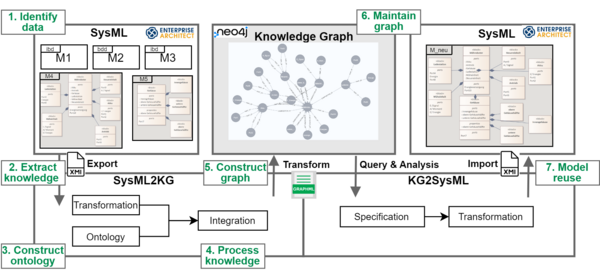
- Automated integration of SysML models of different maturity levels into a central knowledge graph as well as development and maintenance of a tool-independent, consolidated knowledge and model base.
- Expansion of system knowledge by analyzing the knowledge graph using specialized methods, e.g. causal inference methods and graph-based AI models.
- Development of a central web platform that methodically supports the integration, analysis and reuse of models and makes them accessible.
- Derivation, implementation and validation of best practices for the effective use of the platform in development processes and model-based system designs.
Solution approach
The solution approach is based on the use of knowledge graphs as a central knowledge repository for the collection and integration of past SysML models from development projects. Ontology matching and entity resolution are used to identify cross-model structures and merge them into a consolidated graph. Building on this, a structured selection and reuse of relevant models is to be made possible through targeted analyses. In this way, existing system knowledge is made usable and the efficiency of future development processes is methodically supported and improved.

Project duration
07.2025 - 06.2026
Project partners
- Leibniz University Hannover, L3S Research Center
- Volkswagen AG
- IAV GmbH
Funding body
- Ministry of Science and Culture of Lower Saxony
- Volkswagen Foundation